
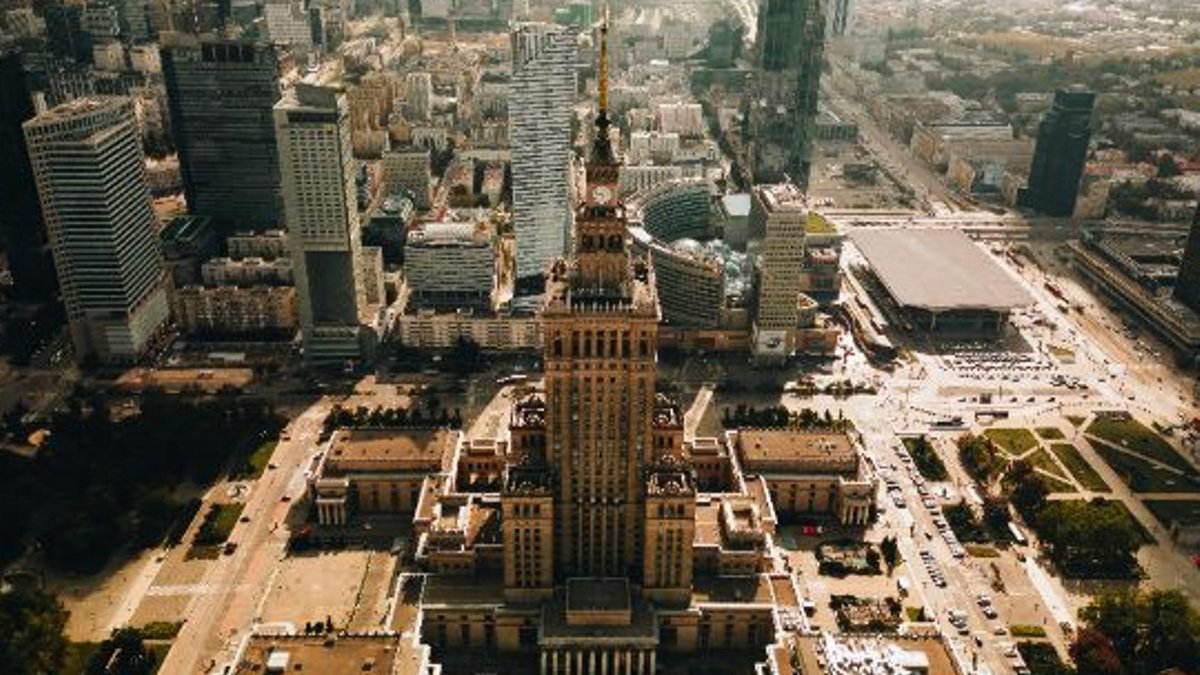
Warsaw is emerging as a leading gateway for commercial‑real‑estate investors across Europe, moving beyond its former label as a Central‑Eastern European market.
Macro strength and capital flows
Poland’s economy is the fastest‑growing major economy on the continent, and Warsaw sits at the top of projected GDP growth for 2026, according to the latest forecast. The city’s unemployment rate of 1.6% contrasts with a national rate of 5.6%, showing solid consumer confidence and steady demand for office space. Inflation has settled near the target at 2.4%, while the National Bank of Poland cut rates by 175 basis points in 2025 and signals further easing through 2026. These monetary conditions have lowered financing costs, encouraging developers to advance projects across office, industrial and residential segments.
Investor sentiment reflects this environment. A recent survey placed Warsaw third among Europe’s most attractive cities for real‑estate investment, trailing only London and Madrid and outpacing Paris, Milan and Barcelona. The city now offers liquidity, transparency and risk‑adjusted returns that rival more established western capitals.
Infrastructure and connectivity
Strategic positioning on north‑south and east‑west transport corridors gives Warsaw a logistical edge. Direct rail links reach Berlin, Vienna, Prague and the Baltic states, while Warsaw Chopin Airport serves over 120 global destinations. The low‑cost Modlin Airport adds capacity for budget airlines.
Perhaps the most market‑shaping project is the extension of Metro Line M2 into the Bemowo district, slated for completion at the end of 2026. Historical patterns suggest a 10–20% uplift in nearby property values once the line opens, presenting a clear opportunity for early investors.
Road upgrades are shortening travel times to key logistics corridors, and the long‑term Central Transport Hub (CPK) will integrate air, rail and road networks, reinforcing Warsaw’s role as a continental distribution center.
Related: Bridal Bling: Matching Your Engagement Ring to Your Wedding Band
Office market: a tight supply picture
Modern office stock reached 6.23 million sqm at the close of 2025, but new delivery fell to under 90,000 sqm, a 15% decline year‑on‑year. Under‑construction space slipped 16% to about 190,000 sqm, indicating limited new capacity through 2027.
Demand remains robust. Total take‑up hit 790,000 sqm in 2025, up 7% from the prior year, with a record fourth‑quarter lease volume of 310,000 sqm. Lease renewals accounted for 51% of activity, while net take‑up split evenly between new leases, expansions and owner‑occupied deals.
Industrial, logistics and data‑centre crossover
Vacancy in the capital’s logistics sector sits at 7.4% nationally, with tighter conditions in prime locations. Rents for large‑scale facilities range from €3.80–5.00, while city‑center logistics schemes command €5.00–7.50 per sqm per month.
A notable trend for 2026 is the competition for land between logistics developers and data‑centre builders. Warsaw’s placement within the FLAP‑D data‑centre market, combined with its strong logistics backbone, is creating a “cross‑sector rivalry” that may push up prices for high‑spec assets.
Retail, tourism and residential aspects
Retail in Warsaw is shifting toward experience‑driven concepts, with new international brands entering the market and shopping centres adding entertainment, fitness and food‑and‑beverage elements. High‑street locations benefit from tourism, as foreign visitors generate roughly a quarter of retail turnover in central districts.
The hotel sector recorded a 10% rise in visitors in 2024, reaching 12.2 million arrivals, and occupancy now hovers around 70% nationally. Warsaw hosts 15 of Poland’s 16 five‑star hotels, and business travel remains a key driver.
Related: Domain REA Group clash over rival marketing claims
Residential rentals are increasingly institutionalised. The private rented sector added 5,821 units in 2025 and expects another 6,200 in 2026. Vacancy sits at a low 3.5%, with occupancy near 98%, attracting institutional capital. Co‑living and student housing projects are expanding, reflecting demographic inflows of young professionals. The housing market continues to draw interest.
Investment outlook and risks
Yield advantages remain compelling. Prime office yields sit around 6.00%, offering a spread over comparable western markets. With interest rates normalising, capital from Western Europe and the United States is poised to redeploy, and Warsaw’s lower entry prices and higher yields make it an attractive target.
Risks include geopolitical tensions linked to the conflict in neighboring Ukraine, though market participants report minimal impact on growth to date. A forthcoming spatial‑planning reform in June 2026 could affect development timelines, but officials expect the changes to streamline approvals.
Long‑term demographic shifts, notably a projected national population decline to about 30 million by 2060 and an aging profile, may reshape demand for office and warehouse space while increasing need for senior housing and healthcare facilities.
Overall, Warsaw’s blend of macro resilience, constrained supply, and infrastructure upgrades positions it as a key European investment destination for 2026 and beyond.


