
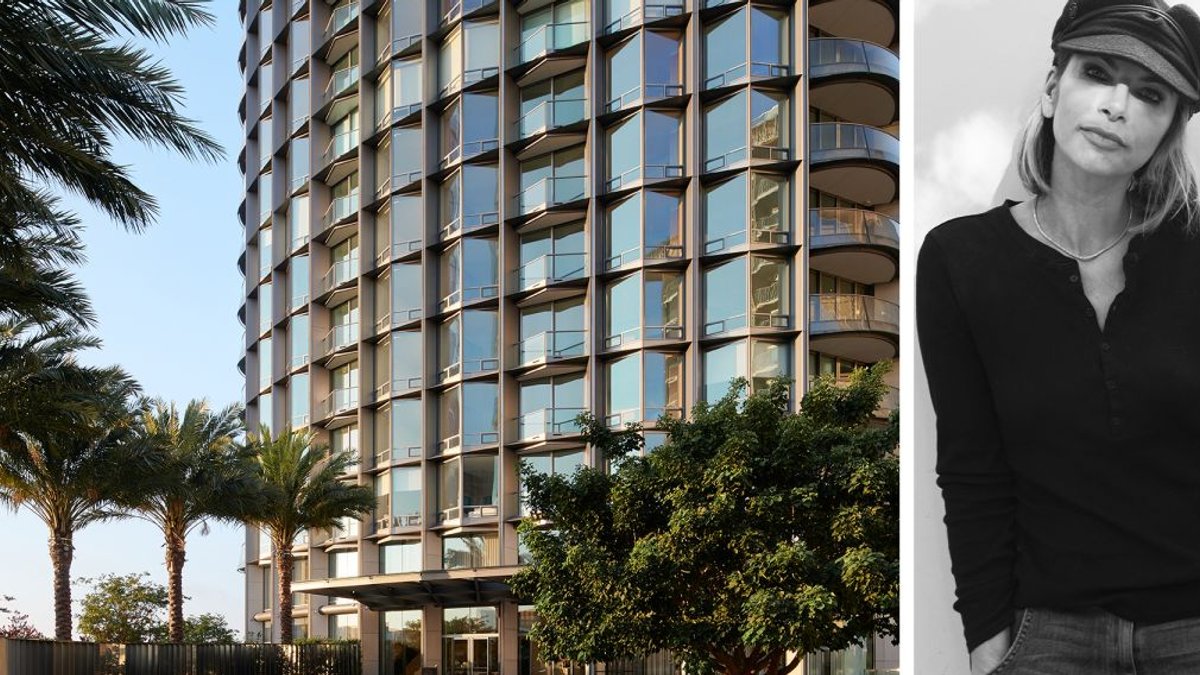
Century City has long been one of Los Angeles’ most concentrated office districts, but Reuben Brothers is betting that the area’s next chapter will look far more residential, experiential and luxury-driven.
A shift toward lifestyle and security
At Century Plaza, the development firm is building up around the Fairmont Century Plaza hotel and Park Elm condominiums, layering in restaurants, galleries, expansive wellness offerings and a revamped public plaza.
Jordana Yechiel of Reuben Brothers said the strategy reflects a larger shift in how people want to live in Los Angeles. She drew inspiration from Dubai’s International Financial Centre becoming a round-the-clock destination, where restaurants, culture and residences transformed what had largely been a business district.
Commercial Observer spoke with Yechiel in late August about why Reuben Brothers made such a large bet on Century City, what luxury buyers expect, and how the firm is curating tenants rather than chasing occupancy and rent.
At Reuben Brothers, the anomaly in the portfolio is Century City. The firm started as a traditional real estate company, then went into hospitality and luxury hotels and some residential development. But these were always trophy assets, whether they were in London, the Surrey Hotel on the Upper East Side, or the Waldorf Astoria in South Beach. Real trophy property first, hospitality second.
We look at the property as a property deal, because that’s the way our brains are wired, and then we bring the luxury to it. This is a new development. We poured more money into this than anything else.
Related: William Raveis Broker Libby McKinney Tritschler Featured
Our belief behind this was we don’t want to just put more stuff out into the world. We want to say, “What’s missing? What’s working? How can we help? Where do we feel we can bring value?”
Los Angeles has had a very funny last seven, eight years. The property markets have really changed a lot. The way people want to live has changed. Security has become an issue that it wasn’t a decade ago in these same areas. There’s definitely been a shift. There’s been massive migration changes — people moving bi-coastal, some are leaving the state, but still everyone loves California and wants to keep their foot on the ground here.
You then saw the shift from downtown. It’s very strange: I’m English, coming over here, and you’ve got a very flat city with two pockets of skyscrapers. You’ve got Century City, and then you’ve got downtown, which I understand from all intents and purposes is like Gotham City — like you’ve just abandoned Wall Street and said, “OK, we’ll just move over here.” Century City has become this really concentrated — unusual pocket of wealth, and of the working people who go to offices every day, in such a small area. And it’s so wonderful to be right next to Beverly Hills — you’re five minutes from Spago and the Beverly Hills Hotel.
Rethinking the future of the city
Yechiel compared the opportunity to Dubai’s financial district. She said she didn’t know if the interviewer knew Dubai, but there’s the Dubai International Financial Centre (DIFC) they built, and that was very similar: towers, people working, banks, law firms — that’s where the commerce and business were. But nobody wanted to live or eat there.
Then they started bringing in great five-star restaurants and art galleries, and it became a hub, and then people said, “Well, why can’t I live here?” And now it’s the place to go.
Transportation
Transportation is central to this broader vision for Century Plaza. We love the proximity to Beverly Hills, but it’s also so close to so many areas that are so central, and there’s proximity to the 405. Then you’ve got the subway coming in. Again, I know Angelenos are freaking out — they’re scared of the subway. I’m English. We need it. You’ve got a subway on Fifth Avenue in New York; you will be OK. If you want to be taken seriously as an international city, we have to be connected. We have to be able to move around.
Related: Fannie and Freddie Support Housing Market
That’s also why we’ve brought in a vertiport on top of our tower. We’ve gone with Joby/Blade, who are on Stage 4 of the five-step FAA process. So they’re the frontrunner in that eVTOL sector. We see that futuristic view of, OK, how do we live, where do we eat, where do we work, and then how do we get around? And then the wellness aspect. Let’s bring it all together in this holistic way.
Reuben Brothers is trying to turn Century Plaza into more of a destination rather than simply another mixed-use project. We love having Century City Mall next to us, and we see that as a massive complement. We don’t want to be Century City Mall, even though we respect it and love it and want to use it.
For the anchor restaurants we brought in, we were choosing from what we don’t have here, because, again, we don’t need more stuff. We have art gallery spaces, in the same way that model worked at the DIFC, to bring in art and culture as a destination place. And we’re very excited for the Estate with Sam Nazarian and Tony Robbins, because that is the future of wellness.
Don’t go to the doctor when you’re sick; go beforehand. It’s a membership model: You keep your checkups, you do all your scans, you can go as often as you want in a super-luxury way. I think Californians will really resonate with that. It’s the first of its kind they’re opening at Century City, and that is a huge fit-out — they’re an anchor here — and that completes that holistic circle, bringing the “doctor” part of wellness into the scheme.
Curating a community, not just real estate
How do the different pieces — the Fairmont, Park Elm and the public area — fit together? We’ve called it — what we’ve got now — the sort of mothership is Century Plaza. Our 400-key hotel, the Fairmont, is doing very well. It had a refit. We’ve got the largest ballroom in L.A. We have a lot of conferences there. We wanted to now add the luxury. We want people to think, “Oh my God, you have this restaurant downstairs,” and bring in a bit of that Vegas ease in the right way.
Part of the Fairmont Hotel — the top floors — are residences. They’re called our Fairmont Residences. We have 68 units that are on short leases — 12, 18, 24 months. Then you’ve got Park Elm, which is our luxury condo tower. We’re about 65 percent sold through there. It’s a luxury tower, but, again, since we don’t need more stuff, you’ve got a 24-hour security guard behind massive iron gates and a 450-foot drive-up with privacy, security, exclusivity, all those key points.
Related: Bidding wars push home prices past asking
We’re rebranding the plaza at the back. It’ll be known as the Promenade or Century Plaza Promenade, and that will be our town square. We’re about to revamp it before the openings of our first restaurants. We’re putting in lovely city street lamps, new paving to break up that concrete jungle we inherited, and to bring some charm. We’re going to have activations out there, sculpture parks. So it will be a lovely place to go and spend time — not only dining in the restaurants or visiting the art galleries, but also kids can go see Santa there, we’ll have wonderful sculptors exhibit there, and our art galleries will spill to the outside.
People coming to visit will come through a gorgeous drive where a valet will meet you. It’s a very five-star feeling. You’re safe — put your Rolex back on. Put your heels on. Go upstairs and have a lovely evening.
Where I’m struggling right now is we’ve got a few units empty, and I’m looking at it like I’m curating an exhibition in a gallery: What paintings should go on which wall? How do they sit and talk to each other? A lot of people have approached us, and I’ve said: “I don’t want you there. You’re not the right fit. I don’t care what rent you’re paying.” I really look at it in a holistic way. What do I feel is missing now? I’d love somewhere to have my hair and nails done. I think all the people working in the towers around there would want that. The people in the hotel would want that. A Pilates studio, or a yoga studio, or a Rumble-style concept. I want a few more of those amenities because I don’t want people to have to travel out. So I’m holding out in key spots for those amenities.
It’s also intentional to create connections for the tenants themselves. I really like introducing them to each other and saying, “How can we synergize and work with each other?” For example, that magnificent penthouse we put out — it has $250,000 worth of Wally’s wine that goes with the apartment. And we’ve got Wally’s downstairs. When you want to replenish your wine bar, that’s part of the package: They’ve curated your collection and will replenish for you. The same with Brabus. We did not want to have a typical car showroom. I said no to many car showrooms that wanted to come in. But when they came, I thought, “No, this is different. This sets the tone for us. This is bespoke. I see you as a design house, not a car shop.” They had a conversation and are discussing working together and putting out a Brabus-Joby collaboration. I think that’s fun — when we introduce everyone to each other and see how they can all benefit from being together.
What are luxury residential buyers in Los Angeles demanding now, and who is buying at Park Elm? We see it very clearly by who’s coming into our building, and it’s very difficult to pin down the uber-luxury buyer. Our apartments started at $2 million and now go up to $68 million. So we’ve got such a wide mix, it really goes across the scope.
I’ve rejected some offers from people who don’t live here and just want to park their money. I’m not trying to do that. I want to build a community. I’d like a building where people can go downstairs — we have mahjong evenings, Wally’s has wine-tasting evenings in the club room — and they really feel, “Oh, I’ve joined a club.” We want that country club sort of vibe where you live. We had some fire victims — people who realized that by the time they’d get back to the Palisades, their families had moved out, so they’re empty nesters prematurely. We’ve also had other empty nesters from other neighborhoods who want to downsize, travel more, have a turnkey and safe place. Safety was a massive issue people talked about a lot — to the point where they question: “How many security guards? Do you have these cameras?” So we see safety being a big part of it.


