
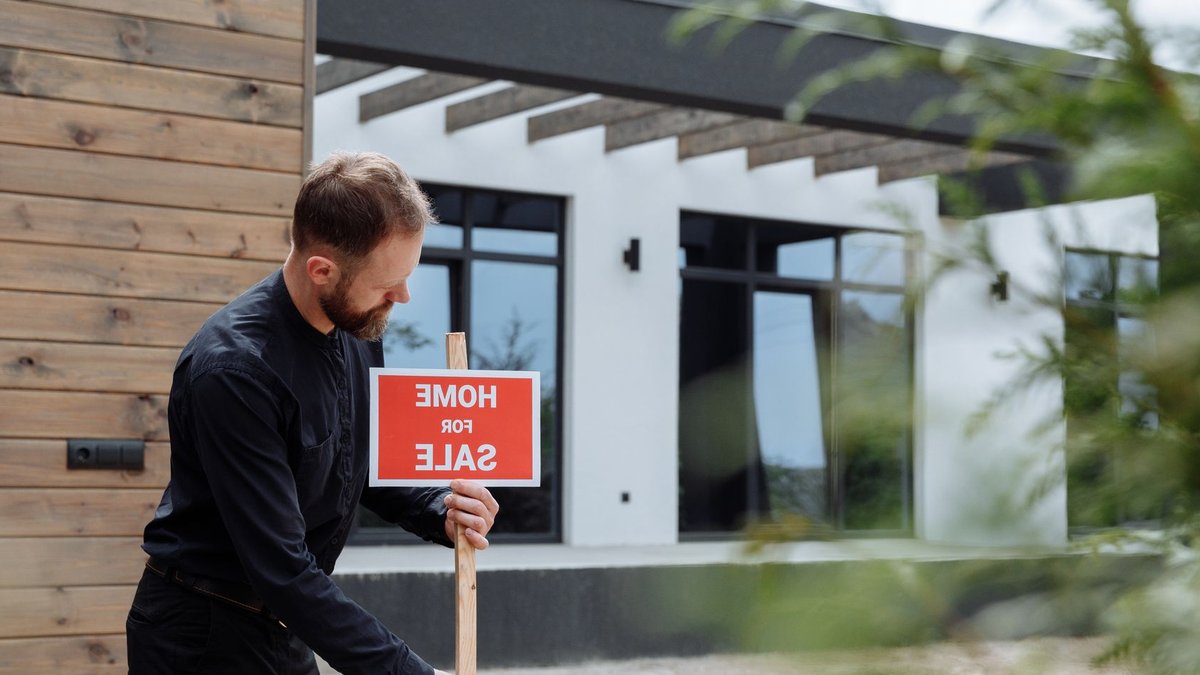
The U.S. real estate market shows a clear divide between private listings and coming-soon listings, with the latter commanding higher prices than standard MLS listings, according to a new independent study. Private listings, meanwhile, sell for less than traditional MLS listings, though their performance varies by market segment and location.
A white paper from the Association of Real Estate License Law Officials (ARELLO) examined over 10 million residential transactions from January 2024 through June 2026. The analysis documented price differences while raising questions about regulatory oversight for state officials, MLS organizations, and industry groups. The data came from Zillow sales records, MLS listing volumes, and high-confidence private listing metrics from systems with at least 5,000 sold listings in 2025.
Coming-soon listings consistently outperformed standard MLS listings, selling for 1.38% more in 2024 and 1.16% more in 2025. By mid-2026, that premium widened to 1.55% above comparable MLS listings. In contrast, private listings sold for 1.26% less in 2024 and 0.87% less in 2025. The gap extended beyond median differences, with lower-priced homes in the 5th–35th percentiles selling for $5,055 less on average through private listings than through standard MLS listings—and $9,212 less than coming-soon listings. At the luxury end (95th–100th percentiles), coming-soon listings fetched $16,850 more, while private listings sold for $3,473 less than standard MLS listings.
Urban markets exhibited the sharpest differences. Private listings in cities sold for 1.54% less than standard listings, while coming-soons sold for 1.77% more. Rural areas showed smaller gaps, with private listings selling for 0.81% less and coming-soons for 1.3% more than standard listings.
Since 2024, the industry has seen a steady decline in private listings alongside a sharp rise in coming-soon listings. High-confidence private listings, those likely sold off-MLS, fell 2% year-over-year from 2024 to 2025 (from 88,300 to 86,805 transactions) and another 3% in the first half of 2026. Meanwhile, coming-soon listings rose 4% annually from 2024 to 2025 (from 427,648 to 443,245) and surged 13% in the first half of 2026.
The shift suggests sellers increasingly favor coming-soon strategies to maximize exposure before full MLS activation. The white paper did not explore motivations, but the data shows a clear preference for visibility over privacy.
Fair housing risks remain a concern. While private listings are not inherently discriminatory, the study found larger price gaps in majority non-white neighborhoods. In majority Hispanic areas, private listings sold for 3.33% less than standard MLS listings, nearly four times the gap seen in majority white neighborhoods (0.88% less). The report emphasized that these findings do not prove discrimination but warrant closer scrutiny of access and marketing practices.
The methodology relied on Zillow’s Automated Valuation Model (AVM) to compare actual sale prices against expected values for each listing type. Standard MLS listings in 2024 sold for 0.62% more than the AVM projected, while in 2025 that premium rose to 0.95%. This suggests that even traditional MLS listings now exceed baseline expectations, though coming-soon and private listings diverge further from that trend. The AVM adjustments accounted for location, property size, and market conditions, ensuring comparisons were made between comparable homes.


