
The federal government is exploring leases for up to 17 parcels of public land—covering a combined 19,200 acres—destined for data center development and supporting power infrastructure. The initiative aligns with the Trump administration’s push to boost the U.S. artificial intelligence sector, with just two firms accounting for over half of the lease filings, according to a Bisnow review of public documents.
Leveraging Public Land for AI Expansion
Most of the proposed projects are in the western U.S., while a few are in the Southeast. The filings show that developers are taking advantage of a July 2025 White House initiative to accelerate the country’s AI industry and last year’s One Big Beautiful Bill Act. Using public lands also means the federal government can use the supremacy clause, a constitutional provision that gives federal law priority over some state laws.
Data Center Development on Public Lands
Industry advocacy group Data Center Coalition praised the Trump administration and the DOE for the policy initiative. “The digital infrastructure that data centers provide is essential to advancing America’s global economic competitiveness, safeguarding national security, and maintaining the country’s edge in cloud computing, artificial intelligence, and many other 21st-century technologies,” said Michele Nellenbach, the trade group’s vice president of federal affairs.
However, elected officials are already speaking out against leasing public lands for data center development in Idaho and Kentucky. A lack of local support could still hamper proposals far away from towns and cities, said John Boyd Jr., principal at site selection firm The Boyd Co. Companies routinely look for some type of public-private partnership, whether that be sales tax abatements for the server equipment or property tax abatements, Boyd added.
Major Projects Underway in Ohio, Utah, and Kentucky
SB Energy, a SoftBank Group company, broke ground on a 189-acre project in southern Ohio, which is planned to become the world’s largest data center to date. The project, known as the Portsmouth Site, includes Department of Energy land and is expected to generate 10,000 construction jobs and 2,000 permanent jobs in the region. Valar Atomics, a company focused on scaling nuclear energy for heavy industrial power, filed an application with the BLM to build a 9,000-acre facility in Carbon County, Utah.
In Utah, the development, named Project Beehive, is planned to include data centers along with 456 small nuclear reactors and space to produce nuclear fuel and store nuclear waste on a Department of Energy site. A Brookfield partnership is planning an energy generation and AI campus on a 785-acre DOE site in Kentucky. Construction is expected to conclude on the former Superfund site in 2031, following remediation efforts that are needed because of the site’s decades of uranium enrichment operations.
Related Post: Who Funds the $1.3 Trillion Data Center Boom
Amentum and DC Blox were chosen to handle building out a 1-gigawatt data center and a 2 GW on-site power plant at the Savannah River Site in South Carolina. The site was used to produce plutonium and tritium for nuclear weapons in the 1950s and has since been the focus of environmental cleanup and managing nuclear materials, as well as research and development. Arevia Power, a Las Vegas-based solar and wind developer, has submitted preapplication filings on six parcels in Nevada, Arizona, and Idaho.
Proposed Campus in Idaho Faces Local Pushback
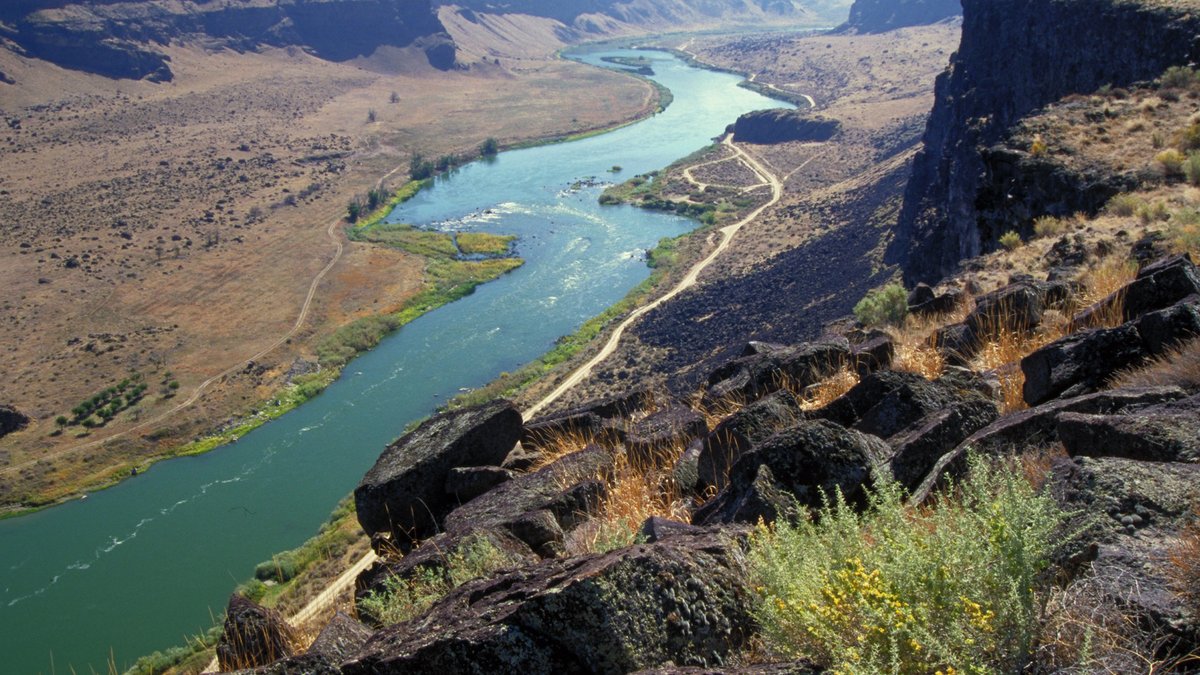
In Idaho, Arevia subsidiary Rhea Data applied to build a 4M SF campus and its own gas plant across a BLM site southeast of Boise. The development on the 3,700-acre site would be five times the size of Meta’s nearby 750K SF Kuna plant, which opened a few days before Rhea’s application was announced. Boise Mayor Lauren McLean said that selling off public lands for data centers is shortsighted, adding that no data center of this size should be considered anywhere without a framework to protect the state’s natural resources.
Copia Digital, a subsidiary of power and AI infrastructure development platform Copia Power, filed preapplications for six projects on BLM land. The company has applications in Nevada, Arizona, Oregon, and Idaho, with all six pending approval. A representative for Copia declined to comment. Skylar Capital Management is also engaging in a back-and-forth over its proposed data center on a BLM-owned parcel spanning more than 80 acres in Nevada.
BLM Approval Halted Over Environmental Review
Townsite Solar 2 LLC originally planned to build a solar farm on the site but pivoted and applied to build a data center instead. The firm received permission to push ahead with the data center in June but was halted by a federal appeals board in September, which concluded that the BLM had likely violated environmental law by approving a project based on a review that was prepared for the solar farm rather than the data center. The project’s fate is currently uncertain, with residents of Boulder City and environmental advocacy groups opposing the development.
The Department of Energy has identified 16 sites to support the construction of data centers and the power infrastructure they require, and several companies have already submitted applications to build on these sites. One of these sites is the Savannah River Site in South Carolina, which has been the focus of environmental cleanup and managing nuclear materials for decades.


